Blog

  • Your Child’s First Dental Visit: A Complete Guide for Parents in Kanpur

    Your Child’s First Dental Visit: A Complete Guide for Parents in Kanpur

    Your Child’s First Dental Visit: A Complete Guide for Parents in Kanpur

    A warm, reassuring roadmap from Dr. Jagveer Singh Saluja — Saluja Dento Max Fac Centre, Kanpur

    If the thought of your child opening their mouth for a stranger makes your heart race a little faster, take a breath — you are exactly the kind of caring parent we wrote this guide for. At Saluja Dento Max Fac Centre, pediatric dentistry in Kanpur is less about drills and more about giggles, high-fives, and tiny, shiny teeth. Here is everything you need to know to walk into that first appointment feeling confident, calm, and prepared.
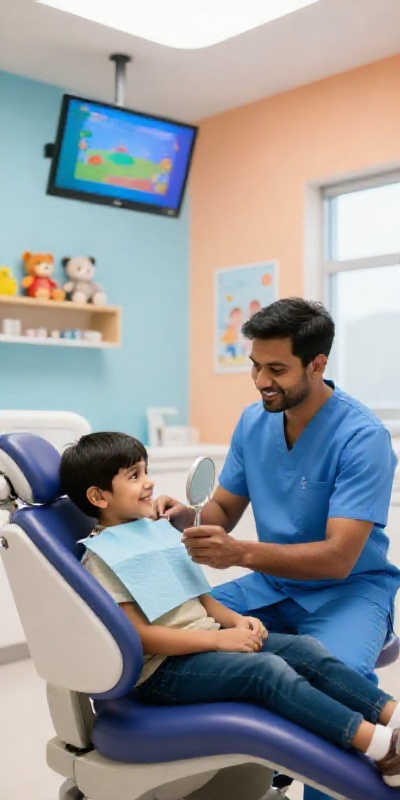
    A first visit to the dentist should feel like a friendly adventure — not a scary chore.

    A Letter to Worried Parents

    Let’s be honest: most of us grew up hearing “the dentist will hurt” stories at family dinners. So when it’s time to take our own little ones, our hearts beat a little faster. Will they cry? Will they cooperate? Will they ever forgive us? The good news from Dr. Jagveer Singh Saluja, who has guided thousands of children through their child’s first dental visit at our pediatric dentistry clinic in Kanpur, is this: when done right, that very first visit becomes one of the most positive, confidence-building experiences of your child’s life — and yours too.

    According to the American Academy of Pediatric Dentistry (AAPD) and the American Dental Association (ADA), a child should see a dentist within 6 months of the first tooth appearing, and no later than 12 months of age (Stanford Children’s Health, AAPD 2014 guidelines). That timeline is supported by the European Journal of Paediatric Dentistry and the Indian Society of Pedodontics. Starting early isn’t overkill — it sets the foundation for a lifetime of healthy smiles, and it dramatically lowers the chance of dental anxiety later in life (PMC, 2021).

    When Should Your Child First Visit the Dentist?

    Every child’s dental journey is unique, but pediatric dentistry follows predictable developmental milestones. Think of the chart below as a friendly roadmap, not a rulebook. If your child is slightly behind on a milestone, that’s perfectly okay — Dr. Saluja will personalize the plan to your child’s pace.

    6 Months First Tooth Appears

    The lower central incisor usually makes its debut. Begin gentle gum wiping with a soft cloth, and start planning your child’s first dental appointment within six months.

    1 Year First Dental Visit Recommended

    The AAPD and ADA recommend the first “well-baby” dental visit by age one. It’s mostly a friendly check, parent education, and getting your child comfortable in a dental chair.

    2–3 Years First Professional Cleaning

    Most baby teeth are now in place. This is the ideal age for a gentle polishing, fluoride assessment, and introducing your child to the full dental team experience.

    6 Years First Adult Teeth Erupt

    The first permanent molars (six-year molars) and incisors arrive — often behind still-present baby teeth. Sealants are highly recommended at this stage.

    7–12 Years Mixed Dentition Assessment

    Baby teeth and adult teeth share the mouth. This is the critical window for orthodontic evaluation, growth guidance, and habit-breaking appliances if needed.

    13–16 Years Teenage Care & Wisdom Teeth

    Wisdom teeth begin forming, orthodontic treatment often peaks, and sports-mouth-guard fitting becomes important. Continues into our general dentistry umbrella.

    Why Pediatric Dentistry Matters

    You wouldn’t take your toddler to a general physician for everything — and the same logic applies to teeth. Pediatric dentists complete an additional 3 years of specialized training beyond dental school, focusing on child psychology, growth, and behavior guidance. Research published in the International Journal of Clinical Pediatric Dentistry confirms that children treated by pediatric specialists have measurably lower dental anxiety and better long-term oral health outcomes (PMC, 2021).

    1

    Developing Teeth Need Specialized Care

    Baby teeth have thinner enamel, larger pulp chambers, and unique decay patterns. Techniques that work on adult teeth can damage a child’s still-developing smile. Pediatric dentists are trained to recognize and treat these subtle differences.

    2

    Behavioral Techniques That Actually Work

    From tell-show-do to positive reinforcement, voice modulation, and protective stabilization — pediatric specialists use evidence-based techniques recognized by the AAPD to help even the most anxious child relax in the chair.

    3

    A Strong Prevention Focus

    Pediatric dentistry emphasizes fluoride, sealants, diet counseling, and parental coaching — the four pillars that prevent 80% of childhood cavities before they ever start.

    4

    Building Lifelong Positive Associations

    The brain forms its “dentist memory” between ages 2 and 6. A gentle, fun first experience rewires the brain to see the dentist as a friend — not a fear — for life (PMC, 2021).

    5

    Early Detection of Orthodontic Issues

    Crossbites, crowding, jaw growth discrepancies, and airway issues are far easier (and cheaper) to correct when caught at age 7–9. Our integrated orthodontic team works hand-in-hand with our pediatric specialists.

    Our 5-Step Tell-Show-Do Approach

    Dr. Jagveer Singh Saluja is known across Kanpur for his patient, almost magical way with children. The secret is a structured, scientifically-proven behavior guidance method adapted from the AAPD’s Behavior Guidance for the Pediatric Dental Patient guidelines (AAPD, 2020):

    1

    Tell in Kid-Friendly Language

    “I’m going to count your teeth with my special tooth counter.” “This magic straw will give your tooth a tiny shower.” No scary words. No surprise movements. Just honest, friendly explanations matched to your child’s age.

    2

    Show on a Model

    Dr. Saluja keeps a friendly toy crocodile and a giant tooth model right at child-eye-level. Children can touch, hold, and “try” the mirror, suction, and polisher on the model before anything comes near their own mouth.

    3

    Do the Gentle Treatment

    Only when your child looks calm and curious do we proceed — slowly, quietly, and always with a parent’s hand within reach. The Tell-Show-Do technique has been shown in multiple meta-analyses to reduce dental anxiety in pediatric patients by up to 40% (ResearchGate, 2024).

    4

    Praise Positive Behavior

    “Wow, you sat so still like a brave little tiger!” Honest, specific praise builds confidence for the next visit. We never shame, scold, or bribe — we celebrate every tiny success.

    5

    Reward with a Small Prize

    Every child leaves with a sticker, a toothbrush of their favorite cartoon character, and a certificate of bravery. It sounds simple, but turning a clinical visit into a small celebration is what makes children ask to come back.

    Services for Every Stage

    Whether your little one has just sprouted their first tooth or is navigating the chaotic teenage years, our pediatric dentistry in Kanpur offers age-appropriate care under one roof.

    6 months – 3 years

    First Visit & Friendly Introduction

    A 20-minute “happy visit” where we meet the family, count teeth with a mirror, and give personalized home-care coaching. No drills. No stress.

    2 – 12 years

    Professional Cleaning for Kids

    Ultrasonic scaling and gentle polishing with kid-flavored pastes (bubblegum, strawberry, chocolate). Six-monthly cleanings prevent 80% of childhood gum issues.

    3 – 14 years

    Fluoride Treatment & Sealants

    Topical fluoride varnish and pit-and-fissure sealants on the chewing surfaces of molars — the #1 proven cavity-prevention combo for kids.

    3 – 12 years

    Pediatric Fillings

    Tooth-colored, mercury-free, BPA-free composite fillings that bond beautifully to baby teeth. Quick, painless, and matched to the natural shade.

    2 – 10 years

    Pulp Therapy / Pulpotomy

    When decay reaches the nerve of a baby tooth, a pulpotomy (a “baby root canal”) saves the tooth until it naturally falls out — protecting the adult tooth underneath.

    4 – 12 years

    Habit Breaking Appliances

    Custom-made, colorful appliances that gently correct thumb-sucking, tongue-thrusting, and mouth-breathing — usually within 3 to 6 months.

    Common Pediatric Concerns We Treat

    From teething troubles to sports injuries, Dr. Saluja’s team sees (and reassures parents about) almost every childhood dental concern. Here are the eight we address most often, with a quick prevention tip for each.

    Baby Bottle Tooth Decay

    Early childhood cavities caused by prolonged milk or juice bottle contact, especially at nap time. White or brown spots on upper front teeth are the first sign.

    Prevention: Switch to a sippy cup by 12 months and never put baby to bed with a bottle.

    Thumb Sucking

    Natural up to age 3–4. Beyond that, it can push front teeth forward and narrow the upper jaw, creating an open bite.

    Prevention: Praise children for not sucking; consider a habit-breaking appliance if it persists past age 5.

    Tongue Thrusting

    The tongue presses against the front teeth during swallowing, gradually pushing them outward. Often linked to mouth breathing and long-term thumb habits.

    Prevention: Myofunctional therapy exercises; airway evaluation if mouth-breathing accompanies it.

    Early Tooth Loss

    Losing a baby tooth too early (from decay or trauma) causes adjacent teeth to drift, blocking the adult tooth from erupting properly.

    Prevention: A space maintainer can hold the spot open until the permanent tooth arrives.

    Teeth Grinding (Bruxism)

    Common during deep sleep phases in children. Usually self-resolves, but persistent grinding can wear enamel and cause jaw pain.

    Prevention: A custom night-guard for kids over 8; stress-reduction and screen-time management help too.

    Dental Anxiety

    Real, common, and treatable. Studies show 1 in 5 children experience some level of dental fear (PMC, 2021).

    Prevention: Start young, stay positive, choose a tell-show-do clinic like ours, and never use the dentist as a threat.

    Crooked Baby Teeth

    Crowding in baby teeth often predicts crowding in adult teeth. Early evaluation (around age 7) allows simple interceptive orthodontics.

    Prevention: Avoid prolonged pacifier use, treat mouth breathing early, and schedule a free orthodontic consultation.

    Sports Injuries

    30% of childhood dental injuries are sports-related. A knocked-out baby or adult tooth is a dental emergency — act within 30 minutes.

    Prevention: Custom-fitted mouth-guards for cricket, kabaddi, football, skating, and even cycling.

    “Every child who sits in our chair leaves a little braver than when they arrived. That’s the real job of pediatric dentistry — not just fixing teeth, but building confident, unafraid adults.” — Dr. Jagveer Singh Saluja, Saluja Dento Max Fac Centre, Kanpur

    Creating a Child-Friendly Environment

    The moment you step into Saluja Dento Max Fac Centre, you’ll notice it doesn’t feel like a typical dental clinic. Our pediatric zone is designed with warm sage-green and soft blue walls, cartoon murals, a ceiling-mounted TV playing your child’s favorite show, gentle music, and a treasure-trove of toys and books in the waiting area. The dental chair itself comes with built-in screens so children can watch cartoons while we work.

    Distraction isn’t a gimmick — it’s evidence-based care. Research published in the International Journal of Paediatric Dentistry (2022) shows that audiovisual distraction reduces perceived pain in pediatric patients by 30–50%. For children with severe anxiety, we offer laughing gas (nitrous oxide) sedation — a safe, mild option that has been used in pediatric dentistry for over 50 years worldwide. Dr. Saluja and his team are certified in pediatric sedation and airway protection, so your child is always in expert hands.

    Preventive Care Tips for Parents

    Most childhood dental problems are 100% preventable. Here are six practical tips, recommended by the Indian Society of Pedodontics and Preventive Dentistry, that you can start using tonight.

    01

    Brush Together

    Make brushing a 2-minute family ritual every morning and night. Kids樑仿 what they see, not what they’re told. Set a timer or play a fun song.

    02

    Limit Sugary Snacks

    Sticky toffees, fruit juices, and packaged biscuits are the top cavity culprits in Indian children. Swap them for cheese, nuts, fruits, and plain milk.

    03

    Use Fluoride Toothpaste

    From age 3 onwards, use a pea-sized amount of fluoride toothpaste (1000 ppm). For children under 3, use a rice-grain smear of kids’ toothpaste.

    04

    First Visit by Age 1

    Don’t wait for a toothache. The AAPD-recommended first visit by 12 months catches problems early and normalizes the dental experience.

    05

    Use a Cup, Not a Bottle

    Transition from bottle to sippy cup by 12–15 months. Prolonged bottle use — especially at night — is the #1 cause of baby bottle tooth decay.

    06

    Lead by Example

    Let your child watch you floss, brush, and smile confidently. Children who see parents prioritizing dental care grow up to do the same.

    When to Worry: Warning Signs

    Children don’t always say “my tooth hurts.” They go quiet, eat on one side, or stop smiling. Watch for these red flags and book an appointment if you notice any:

    !

    White spots or chalky lines on teeth — the earliest sign of decay.

    !

    Dark brown or black spots that don’t brush off — active cavities.

    !

    Persistent bad breath even after brushing — possible decay or gum infection.

    !

    Swollen, red, or bleeding gums — early gum disease or abscess.

    !

    Tooth pain, especially at night or with hot/cold food — nerve involvement.

    !

    Consistent mouth breathing during the day — airway or jaw-development issues.

    !

    Jaw clicking, popping, or difficulty opening wide — possible TMJ concerns.

    Cost & Family Discounts

    Quality pediatric dentistry should never feel out of reach. Below is a transparent snapshot of our standard pediatric treatment pricing at Saluja Dento Max Fac Centre, Kanpur. We accept all major insurance plans, and offer special family discounts when 2 or more siblings are treated together.

    TreatmentTypical Price (β‚Ή)What’s Included
    First Visit & Consultationβ‚Ή 300Exam, parent counseling, growth chart
    Professional Cleaning (Pediatric)β‚Ή 800 – 1,500Scaling, polishing, oral hygiene demo
    Fluoride Treatmentβ‚Ή 500 – 1,000Varnish application, post-care kit
    Sealants (per tooth)β‚Ή 500 – 1,000Pit & fissure sealing, follow-up
    Pediatric Filling (composite)β‚Ή 600 – 1,200Tooth-colored, BPA-free material
    Pulpotomy / Pulp Therapyβ‚Ή 1,500 – 2,500Baby root canal + SS crown if needed
    Habit-Breaking Applianceβ‚Ή 3,000 – 6,000Custom appliance + monthly reviews
    Custom Sports Mouth-Guardβ‚Ή 1,500 – 2,500Impression, fitting, protective case

    Prices are indicative and may vary based on case complexity. EMI options available. Family discount: 10% off when 2+ children are treated.

    Frequently Asked Questions

    1. At what age should I bring my child for their very first dental visit?
    According to the AAPD, ADA, and Indian Society of Pedodontics, your child should see a pediatric dentist by their first birthday, or within 6 months of the first tooth appearing — whichever comes first. Starting early helps your child get used to the dental environment and allows the dentist to spot any early concerns.
    2. How is a pediatric dentist different from a regular family dentist?
    Pediatric dentists complete an extra 3 years of specialized training after dental school, focusing on child development, behavior guidance, growth modification, and treatments specific to baby and growing teeth. They also design clinics and use language tailored to make children feel safe.
    3. My child is terrified of the dentist. What should I do?
    Please don’t avoid the visit out of fear — this only makes anxiety worse. Choose a pediatric clinic that uses the tell-show-do method, never use the dentist as a threat (“if you don’t behave, the doctor will give you a shot”), and consider a pre-visit “happy tour” of the clinic. At Saluja Dento Max Fac Centre, Dr. Saluja specializes in anxious children and offers gentle nitrous oxide (laughing gas) sedation when needed.
    4. Are dental X-rays safe for children?
    Yes. We use low-dose digital X-rays with lead aprons and thyroid collars. Radiation exposure is comparable to a short airplane flight. X-rays are taken only when clinically necessary — typically once a year for low-risk children and more frequently for those with active decay or orthodontic needs.
    5. Are baby teeth really that important? They’re going to fall out anyway, right?
    Absolutely important! Baby teeth hold space for the adult teeth, guide jaw development, help with speech, and allow proper chewing for nutrition. Losing them early can lead to crowding, misalignment, and costly orthodontic treatment later. AAPD research shows children with healthy baby teeth are 3x more likely to have healthy adult teeth.
    6. Do you offer EMI or insurance support?
    Yes. We accept all major dental insurance providers and TPAs, and offer 0% EMI options on treatments above β‚Ή10,000 through partner banks. Our front desk team will help you with all paperwork and pre-authorizations — just bring your insurance card and a valid ID to your visit.

    By the Numbers: Pediatric Dental Health in India

    60%
    of Indian children have cavities by age 6
    40%
    reduction in anxiety with Tell-Show-Do
    80%
    of decay is preventable with sealants + fluoride
    1 in 5
    children experience some dental fear

    Give Your Child the Gift of a Healthy Smile

    Book your child’s first visit with Dr. Jagveer Singh Saluja at Saluja Dento Max Fac Centre, Kanpur. Our first-visit consultation is just β‚Ή300 — and we promise a high-five, a sticker, and a smile.

    References: American Academy of Pediatric Dentistry (AAPD) Guidelines (2014, 2020) · American Dental Association (ADA) Recommendations · Stanford Children’s Health First Visit Fact Sheet · Int J Clin Pediatr Dent (PMC9983582, 2023) · J Clin Med (PMC8700154, 2021) · European Journal of Paediatric Dentistry (2020) · Tell-Show-Do Meta-Analysis (ResearchGate, 2024) · Indian Society of Pedodontics & Preventive Dentistry.

  • Smile Makeover in Kanpur: A Complete Guide to Veneers, Whitening & Smile Design

    Smile Makeover in Kanpur: A Complete Guide to Veneers, Whitening & Smile Design


    Cosmetic Dentistry β€’ 9 min read

    Smile Makeover in Kanpur: A Complete Guide to Veneers, Whitening & Smile Design

    An editorial deep-dive into the art and science of cosmetic dentistry, crafted by the team at Saluja Dento Max Fac Centre under the vision of Dr. Jagveer Singh Saluja.

    There is a particular kind of silence that fills a boardroom the moment someone covers their teeth while laughing. It is small, almost imperceptible, but for the person doing it, the moment is enormous. A confident smile is no longer just about vanity — it is currency in a city like Kanpur where first impressions drive careers, marriages, and business deals. If you have ever caught yourself hiding your teeth in photographs or holding back a laugh in a meeting, this guide is for you.

    A smile makeover in Kanpur has moved far beyond the old stereotype of “getting teeth capped.” Today, at practices like Saluja Dento Max Fac Centre, it is a meticulously designed aesthetic journey that blends Digital Smile Design, premium porcelain, and the calm clinical hands of Dr. Jagveer Singh Saluja — one of the city’s most respected dental veneers cosmetic dentistry specialists. Read on for everything you need to know.

    What Exactly Is a Smile Makeover?

    A smile makeover is not a single product you buy off a shelf. It is a bespoke, multi-procedure plan crafted after a detailed study of your face shape, lip dynamics, gum line, skin tone, personality, and aspirations. Think of it as couture for your teeth — the outcome is uniquely yours.

    At our centre, a smile makeover Kanpur plan typically combines two to four of the following treatments, sequenced to minimise chair-time and maximise aesthetics:

    • ✦ Tooth Discoloration — Yellow, brown, tetracycline-stained, or fluorosis-affected teeth that do not respond to regular scaling.
    • ✦ Chipped, Cracked or Worn Teeth — Damage from grinding (bruxism), accident trauma, or simply years of use.
    • ✦ Gaps and Spacing — Diastemas (especially between the front two teeth) that disrupt the visual flow of the smile.
    • ✦ Mild Misalignment — Crooked, overlapping, or rotated teeth that you wish to correct without years of braces.
    • ✦ Gummy Smile & Uneven Gum Line — Excessive gum display or asymmetric gingival contours that throw the smile off-balance.

    “A smile is the cheapest luxury you can offer yourself. Once you have designed yours, you wear it for life.”

    — Dr. Jagveer Singh Saluja

    The Smile Makeover Process: 5 Carefully Sequenced Steps

    A smile makeover Kanpur journey at Saluja Dento Max Fac Centre follows a transparent, technology-driven protocol — never guesswork.

    1

    Smile Consultation

    A 45-minute face-to-face with Dr. Saluja. We listen, photograph, scan, and understand your goals.

    2

    Digital Smile Design

    A 3D simulation of your new smile, generated on your actual photos — no guesswork, no surprises.

    3

    Mock-up & Trial

    A temporary version is placed in your mouth so you can “test-drive” the new smile before committing.

    4

    Treatment Phase

    Veneers, whitening, gum contouring and any other planned procedures are completed in planned sittings.

    5

    The Reveal

    Hand mirror, photographer, family. We hand you the smile you came in dreaming of.

    This protocol uses Digital Smile Design (DSD) software — a tool used by leading cosmetic practices worldwide. It means you see your new smile on your own face before a single tooth is touched.

    Popular Procedures We Offer

    A smile makeover Kanpur plan at our centre is built from the following pillars. Each procedure is selected for a reason — never as an upsell.

    Porcelain Veneers

    • Material: IPS e.max • 2 visits • 10–15 yr lifespan

    Ultra-thin ceramic shells hand-layered by our master ceramist. Used for the visible upper 8–10 teeth to deliver a uniform, luminous smile.

    ‎β‚Ή 8,000 – β‚Ή 15,000 / tooth

    Composite Bonding

    • Single visit • 5–7 yr lifespan • Reversible

    A sculpted tooth-coloured resin applied directly to the tooth, hardened with a blue light. Excellent for chips, small gaps, and edge re-shaping.

    ‎β‚Ή 1,500 – β‚Ή 3,000 / tooth

    Teeth Whitening

    • In-office, take-home & combination options

    Professional bleaching using hydrogen peroxide gels under controlled conditions. Brightens teeth by up to 8 shades in a single sitting.

    In-office: ‎β‚Ή 8,000 – β‚Ή 15,000

    Take-home kit: ‎β‚Ή 5,000 – β‚Ή 10,000

    Combo protocol: ‎β‚Ή 12,000 – β‚Ή 20,000

    Gum Contouring

    • Laser-assisted • Single visit

    A gentle laser reshapes the gum line to correct a gummy smile or asymmetry. The result is instant, healing is rapid, and discomfort is minimal.

    ‎β‚Ή 5,000 – β‚Ή 15,000

    Digital Smile Design

    • Pre-treatment visualisation

    A digital preview of your future smile — the consultation fee is adjusted into the final treatment cost if you proceed.

    ‎β‚Ή 3,000 – β‚Ή 5,000 (consultation)

    Full Mouth Rehabilitation

    • Comprehensive restoration

    For patients with severe wear, multiple missing teeth, or collapsed bite. Combines implants, crowns, veneers, and gum therapy.

    ‎β‚Ή 50,000 – β‚Ή 2,00,000+

    Materials Matter: Porcelain vs Composite

    Choosing between materials is the most common dilemma in dental veneers cosmetic dentistry. The table below is how Dr. Saluja explains it during the consultation.

    Digital Smile Design: See It Before You Say Yes

    Imagine buying a home without a floor plan. You would never do it. Yet most patients still commit to cosmetic dentistry without seeing the final result. We changed that the day we introduced Digital Smile Design at our Kanpur practice.

    Using an intra-oral 3D scanner and AI-driven smile simulation software, we capture a high-resolution model of your teeth and face. The software then generates a hyper-realistic preview of your new smile — the exact tooth shape, length, and shade proposed for you. Adjustments are made on-screen until you fall in love with what you see.

    01

    No More Surprises

    You see the final smile on day one — not on the day of cementation.

    02

    Co-Design

    You are part of every decision — shape, shade, length, smile line.

    03

    Trial Mock-up

    A temporary version is placed in your mouth so you can feel the new smile in motion.

    04

    Predictable Outcomes

    DSD improves case predictability by over 90% — fewer adjustments, fewer revisions.

    What Patients in Kanpur Choose Most

    Based on the last 200 smile makeover consultations at Saluja Dento Max Fac Centre, here is how the requests break down. Porcelain veneers continue to lead, but combination plans are the fastest-growing segment.

    The Smile Gallery: Real Kanpur Transformations

    Numbers on a screen never tell the full story. Here are three cases — anonymised — that demonstrate the breadth of what our smile gallery can deliver.

    CASE 01

    The Executive Smile — 16 Veneers

    Context: A 38-year-old entrepreneur with tetracycline staining and worn incisal edges.

    Treatment: 16 IPS e.max porcelain veneers, designed via DSD, placed in 2 visits.

    Outcome: A natural, shade-B1 uniform smile that took 10 years off his appearance. View similar →

    Investment: ‎β‚Ή 1,92,000  |  Time: 10 days

    CASE 02

    The Bride-To-Be Glow-Up

    Context: A 27-year-old bride with mild yellowing and a chipped front tooth, wedding in 6 weeks.

    Treatment: Combination protocol — in-office whitening plus composite edge bonding on 4 front teeth.

    Outcome: Camera-ready smile, completed in 3 sittings. View similar →

    Investment: ‎β‚Ή 24,000  |  Time: 3 weeks

    CASE 03

    The Complete Rebuild

    Context: A 52-year-old professional with 4 missing molars, collapsed bite, and severe wear.

    Treatment: Full mouth rehabilitation — 4 dental implants, 18 zirconia crowns, gum therapy, whitening.

    Outcome: Restored function and a magazine-cover smile.

    Investment: ‎β‚Ή 4,80,000  |  Time: 5 months

    Cost & Easy EMI Options in Kanpur

    A confident smile should not be a privilege. At Saluja Dento Max Fac Centre, we offer interest-free EMIs starting from ‎β‚Ή 1,500 per month through partner financiers, making world-class cosmetic dentistry accessible to professionals, students, and families across Kanpur.

    EMI Snapshot: A typical 8-veneer porcelain smile (‎β‚Ή 96,000) translates to approximately ‎β‚Ή 4,000/month over 24 months. A single-visit composite bonding refresh starts at ‎β‚Ή 1,500/month. Discuss a custom plan →

    What to Expect: Your Treatment Timeline

    Most veneer-led smile makeovers at our centre are completed in 2–4 sittings. Here is the typical week-by-week journey.

    Maintaining Your New Smile

    A porcelain veneer can last 15 years. A bonding, 7. The difference is almost always how you care for it.

    β˜•

    Avoid Staining Foods for 48 Hours

    Post-whitening, the enamel pores are open. Hold off on tea, coffee, red wine, and turmeric for the first two days.

    πŸ₯€

    Sip Through a Straw

    A simple straw dramatically reduces contact between staining liquids and your front teeth.

    πŸͺ₯

    Use a Whitening Toothpaste

    Choose a low-abrasion whitening paste to maintain brightness between professional cleanings.

    🧡

    Floss Daily

    Healthy gums are the frame of a beautiful smile. Flossing protects the gum line and the edges of veneers.

    πŸ“…

    Six-Monthly Cleanings

    Professional scaling and polishing every six months keeps your smile brighter for longer.

    πŸ›‘οΈ

    Wear a Night Guard

    If you grind your teeth at night, a custom night guard protects veneers and natural teeth from chips and wear.

    Frequently Asked Questions

    Are veneers permanent? +

    Porcelain veneers are considered a permanent commitment because a thin layer of enamel is removed to bond them. They typically last 10–15 years before needing replacement. Composite veneers are reversible but have a shorter lifespan of 5–7 years.

    Will my veneers look natural? +

    Absolutely — when designed by an experienced cosmetic dentist. At our Kanpur clinic, we use Digital Smile Design to match the shape, translucency, and shade of veneers to your face, lips, and personality. The result is indistinguishable from naturally perfect teeth.

    What is the difference between veneers and crowns? +

    A veneer covers only the front surface of a tooth — ideal for cosmetic improvements. A crown (cap) covers the entire tooth — used when the tooth is structurally damaged, root-canal treated, or heavily filled. Veneers are a cosmetic choice; crowns are often a structural necessity.

    Is professional teeth whitening safe? +

    Yes, when performed under professional supervision. We use clinically tested hydrogen-peroxide gels, protect your gums, and monitor sensitivity throughout. Whitening does not damage enamel when done correctly.

    Can I preview the results before committing? +

    Yes. Our Digital Smile Design process creates a 3D simulation of your future smile on your own photographs. We also do a physical mock-up in your mouth, so you can see, feel, and even take home a preview before any irreversible treatment begins.

    How long does the entire treatment take? +

    Most porcelain veneer smile makeovers are completed in 2–4 sittings over 2–3 weeks. A full mouth rehabilitation can take 4–6 months. Whitening-only plans are usually finished in a single visit.

    Key Takeaways

    A smile makeover Kanpur is no longer a luxury reserved for the privileged few. It is an art-and-science combination accessible to anyone willing to invest in themselves.

    • A smile makeover is a customised plan — never a one-size-fits-all product.
    • Digital Smile Design lets you see the result before committing to dental veneers cosmetic dentistry.
    • Material choice (porcelain vs composite) defines cost, longevity, and aesthetics.
    • EMIs from ‎β‚Ή 1,500/month have made premium cosmetic dentistry accessible across Kanpur.
    • The result lasts 10–15 years — but only if you maintain it like a luxury asset.

    Begin Your Transformation

    Begin Your Smile Transformation Today

    Step into a private consultation with Dr. Jagveer Singh Saluja. Walk out with a smile you have always wanted — and a plan you understand.

    Saluja Dento Max Fac Centre  •  Kanpur  •  Dr. Jagveer Singh Saluja, Lead Smile Designer

    Continue Reading


  • Painless Single-Sitting Root Canal Treatment in Kanpur: A Modern Approach

    Painless Single-Sitting Root Canal Treatment in Kanpur: A Modern Approach


    Treatment Guides β€’ 8 min read

    Painless Single-Sitting Root Canal Treatment in Kanpur: A Modern Approach

    Reassuring expert guidance from Saluja Dento Max Fac Centre, Ashok Nagar, Kanpur β€” where modern rotary endodontics meets the comfort every patient deserves.

    ⚑ Single Visit
    πŸ’‰ Truly Painless
    πŸ₯ Advanced Tech

    If the words “root canal” make your stomach drop, you are not alone. For decades, root canal treatment has been the most feared phrase in dentistry β€” passed down through stories of long chairs, sharp instruments, and throbbing weekends. But here is the truth: modern painless root canal treatment in Kanpur has almost nothing in common with the procedure your parents once endured. Thanks to rotary endodontics, digital imaging, and modern anesthesia, single sitting RCT at Saluja Dental is now a calm, predictable, one-visit experience β€” often completed in under 90 minutes.

    In this comprehensive guide, Dr. Jagveer Singh Saluja and the team at Saluja Dento Max Fac Centre walk you through everything you need to know β€” from the anatomy of your tooth, to advanced technology, recovery timelines, transparent pricing, and the myths we hear every single day. Read on, and trade your fear for confidence.

    What Exactly Is a Root Canal?

    Think of your tooth as a small, living apartment building. The outer walls are enamel (the hardest substance in your body), the middle floors are dentin (a sensitive, supportive layer), and the central suite β€” the pulp chamber β€” is where the nerve, blood vessels, and connective tissue live. From this central suite, narrow corridors called root canals run down through the roots into the jawbone. When bacteria invade this inner space (through deep decay, a crack, or trauma), the pulp becomes inflamed or infected, and that is when you feel that unmistakable, throbbing toothache.

    A root canal treatment is essentially a deep, microscopic cleaning of that inner chamber and the canals, followed by a sealed filling. We are not “removing the tooth” β€” we are saving it. Imagine decluttering a small, infected room, scrubbing every surface, and then sealing it permanently so no bacteria can ever return. That is exactly what Dr. Saluja does for your tooth, using magnification and precision instruments that fit inside spaces thinner than a human hair.

    Anatomy of a Tooth (Cross-Section)

    Enamel Dentin Pulp (nerve) Root canal Healthy tooth structure

    Why Single-Sitting RCT Works So Well

    The shift from multi-visit to single-sitting RCT in Kanpur is not a marketing gimmick β€” it is the natural outcome of three major advances converging in modern endodontics. First, rotary endodontic files made of nickel-titanium are flexible enough to follow the natural curve of any canal, cleaning 360Β° in a fraction of the time stainless-steel hand files required. Second, electronic apex locators measure the exact length of your root to within half a millimetre, eliminating guesswork and reducing the number of X-rays needed. Third, modern local anesthetics like articaine and mepivacaine are profoundly effective, and combined with pre-emptive techniques (oral analgesics, topical gels, and computer-controlled delivery), they make the procedure genuinely comfortable.

    At Saluja Dento Max Fac Centre, we have found that approximately 80% of qualifying cases β€” those without acute swelling, severe anatomical complexity, or reinfection from a previous attempt β€” can be completed comfortably in a single 60–90 minute appointment. That means one injection, one sitting, and one walk out of the clinic with your tooth saved. For patients travelling from across Kanpur and neighbouring districts, this single-visit model saves hours of work leave, transport, and follow-up scheduling.

    Single-Visit vs Multiple-Visit RCT β€” Patient Experience

    Signs You May Need a Root Canal

    Tooth pain is your body’s alarm system β€” and ignoring it rarely makes it quieter. Here are the eight clinical signs Dr. Saluja evaluates during a general dentistry consultation:

    • 1. Severe, persistent toothache: Pain that wakes you up at night, throbs spontaneously, or radiates to your jaw, ear, or head is a classic indicator of pulp inflammation that will not resolve on its own.
    • 2. Prolonged sensitivity to hot or cold: A twinge is normal; lingering pain for 30 seconds or more after the stimulus is removed suggests the nerve is irreversibly damaged.
    • 3. Swelling or tenderness in nearby gums: A small pimple, redness, or tenderness on the gum near a tooth’s root tip often signals an abscess draining infection.
    • 4. Tooth darkening or discolouration: A greyish or darkened tooth often means the pulp inside has died and is breaking down, releasing pigments into the dentin.
    • 5. A persistent “pimple” on the gums: A draining sinus tract looks alarming but is actually a pressure-release valve β€” your body is literally trying to vent the infection.
    • 6. A cracked or chipped tooth: Even a hairline crack can be a superhighway for bacteria to reach the pulp, especially if pain occurs on biting release.
    • 7. Deep decay visible clinically or on X-ray: When a cavity extends more than two-thirds into the dentin, the pulp is at imminent risk even before pain begins.
    • 8. A history of dental trauma: A tooth that was hit years ago can develop “delayed pulp necrosis” β€” the nerve dies slowly, often silently, until an infection flares up.

    The Step-by-Step Procedure at Saluja Dental

    Knowing what happens during the appointment removes a great deal of fear. Here is exactly what to expect when you arrive at our Ashok Nagar clinic for single-sitting root canal treatment:

    1. 1Diagnosis with RVG digital X-ray: A high-resolution radiovisiograph captures the tooth in seconds with 90% less radiation than film. Dr. Saluja studies canal anatomy, infection depth, and bone status before touching a single instrument.
    2. 2Local anaesthesia & isolation: A topical gel numbs the gum first, then a fine-gauge injection delivers articaine. A rubber dam (a small sheet over the tooth) keeps the area dry, sterile, and free of debris β€” a true hallmark of modern endodontics.
    3. 3Access opening: A small, precise entry is made on the chewing surface to reach the pulp chamber. Magnification loupes help preserve as much healthy tooth structure as possible.
    4. 4Pulp removal with rotary endodontics: Nickel-titanium rotary files β€” flexible, quiet, and fast β€” gently clean and shape the canals. An electronic apex locator confirms the exact working length in real time, so nothing is left behind.
    5. 5Cleaning & disinfection: Canals are flushed with sodium hypochlorite and EDTA to dissolve tissue and kill bacteria. Laser-activated irrigation or ultrasonic agitation may be used for the most resistant infections.
    6. 6Filling, sealing & crown: The canals are sealed with biocompatible gutta-percha and resin sealer using a warm-vertical technique. A custom dental crown is recommended within 2–4 weeks to protect the now-brittle tooth from fracture.

    “A root canal does not cause pain β€” it relieves it. With today’s rotary systems and proper anesthesia, saving a tooth should feel no more dramatic than getting a filling.”

    β€” Dr. Jagveer Singh Saluja, Saluja Dento Max Fac Centre

    Advanced Technology That Makes It Painless

    Technology is the single biggest reason root canal treatment has shed its fearsome reputation. At Saluja Dento Max Fac Centre we have invested in the same endodontic ecosystem used by leading specialist practices globally:

    Recovery: What to Expect

    Healing after a single-sitting root canal is usually uneventful. Here is a realistic, day-by-day timeline:

    Day 1 – 3

    Mild tenderness on biting is normal. Over-the-counter ibuprofen or paracetamol handles it well. Avoid chewing on the treated side.

    Week 1

    Discomfort fades. You can return to your normal diet on the opposite side. We schedule a follow-up to plan the final crown.

    Week 2 – 4

    Crown is placed. The tooth is fully functional, indistinguishable from its neighbours, and protected for decades to come.

    Save Your Tooth vs Extraction: Why RCT Wins

    Pulling a tooth may seem simpler and cheaper, but a side-by-side comparison reveals the hidden long-term costs:


    Root Canal + Crown

    • βœ“ Preserves your natural tooth and root
    • βœ“ Maintains jawbone density and facial structure
    • βœ“ Keeps bite alignment stable
    • βœ“ No need for an implant or bridge
    • βœ“ Lasts 10–20+ years with proper care
    • βœ“ Single-visit option saves time off work


    Extraction (Tooth Removal)

    • βœ— Loss of natural tooth and root stimulation
    • βœ— Jawbone begins to shrink within 6 months
    • βœ— Neighbouring teeth drift and tilt
    • βœ— Requires implant (β‚Ή25,000+) or bridge later
    • βœ— Higher lifetime cost when restored
    • βœ— Multiple appointments over months

    Cost & EMI Options in Kanpur

    We believe transparent pricing is part of painless dentistry. At our Ashok Nagar clinic, a single-sitting root canal with rotary endodontics typically ranges between β‚Ή4,000 and β‚Ή8,000 per tooth, depending on canal complexity, the type of crown chosen, and any additional restorative work required. Complex retreatments or molar cases may cost slightly more.

    To make quality endodontic care accessible to every family in Kanpur, we offer no-cost EMI options starting at just β‚Ή500/month through partner finance providers, in addition to accepting all major cashless insurance and TPA empanelments. Our front-desk team will gladly share an itemised estimate before any treatment begins β€” no surprises, no hidden fees.

    Indicative Cost Breakdown (Single Tooth, Kanpur)

    Common RCT Myths vs Facts

    Our FAQ section receives these five concerns almost daily. Let’s separate fiction from fact.

    ❌ Myth: Root canals are extremely painful.

    βœ… Fact: With modern anesthesia and rotary instruments, most patients feel no more discomfort than a deep filling. The pain that brought you to the clinic is what goes away.

    ❌ Myth: Extraction is a better long-term option.

    βœ… Fact: Nothing functions like your natural tooth. Extraction leads to bone loss, shifting teeth, and the eventual need for an implant that costs several times more.

    ❌ Myth: Root canals cause illness elsewhere in the body.

    βœ… Fact: This myth dates back to 1920s research long since debunked. Modern peer-reviewed studies, including those published in JAMA and the Journal of Endodontics, confirm no such link.

    ❌ Myth: Multiple visits are always required.

    βœ… Fact: With rotary endodontics, electronic apex locators, and RVG imaging, the majority of cases at Saluja Dental are completed in a single 60–90 minute sitting.

    ❌ Myth: A root-canaled tooth is weak and will break.

    βœ… Fact: The tooth itself becomes slightly more brittle, but a timely crown restores 95% of its original strength and protects it for decades.

    Frequently Asked Questions

    How long does a single-sitting root canal take at Saluja Dental? +

    Most anterior teeth take 45–60 minutes; molars with multiple canals take 75–90 minutes. You walk out with the canal sealed on the same day.

    Will I need a crown afterwards? +

    In nearly all cases, yes. A crown protects the treated tooth from fracture and restores full chewing function. We usually place it within 2–4 weeks of the root canal.

    Is the procedure safe during pregnancy? +

    Yes, root canal treatment is considered safe in the second trimester and beyond. We use lead aprons, low-dose RVG imaging, and pregnancy-safe anesthetics to protect both mother and baby.

    Can I drive home after a single-sitting RCT? +

    Yes. The anaesthesia wears off in 2–4 hours, and most patients resume normal activities immediately, although we recommend avoiding hard chewing until a crown is placed.

    What if my root canal was done elsewhere and is failing? +

    We routinely perform retreatments using microscopic techniques. Success rates for non-surgical retreatment range from 75–88%, even years after the original procedure.

    Do you accept insurance and offer EMI? +

    We accept all major cashless insurance and TPA empanelments. Uninsured patients can opt for no-cost EMI starting at β‚Ή500/month through our finance partners.

    Don’t Let Tooth Pain Win β€” Save Your Tooth Today

    Book a consultation with Dr. Jagveer Singh Saluja at Saluja Dento Max Fac Centre, Ashok Nagar, Kanpur. Walk in with pain. Walk out with relief β€” in a single visit.

    Saluja Dento Max Fac Centre β€’ Ashok Nagar, Kanpur β€’ Serving patients from across Uttar Pradesh with compassion and modern technology.

    Key Takeaways

    Painless single-sitting root canal treatment in Kanpur is no longer a contradiction in terms β€” it is the new standard of care at Saluja Dento Max Fac Centre. With rotary endodontics, electronic apex locators, RVG imaging, and modern anesthesia, Dr. Jagveer Singh Saluja completes most cases in one visit of 60–90 minutes. Recovery is quick, costs are transparent (β‚Ή4,000–8,000 per tooth, with EMI from β‚Ή500/month), and your natural tooth β€” along with your smile, your bite, and your confidence β€” is preserved for decades.

    If you have been postponing a dental visit out of fear, consider this your sign. The chair is comfortable, the team is gentle, and the technology is world-class. Reach out today, and let us show you what modern dentistry really feels like.

    Related Articles


  • Wisdom Teeth Removal Kanpur: When It’s Necessary & What to Expect

    Wisdom Teeth Removal Kanpur: When It’s Necessary & What to Expect


    Maxillofacial & Surgery β€’ 8 min read

    Wisdom Teeth: When Removal Is Necessary & What to Expect

    A specialist-led guide from Saluja Dento Max Fac Centre, Ashok Nagar, Kanpur β€” clarifying the eight warning signs of an impacted third molar and demystifying modern, virtually painless wisdom teeth removal in Kanpur.

    By Dr. Jagveer Singh Saluja, MDS (Oral & Maxillofacial Surgery)
    |
    June 2026

    The phrase wisdom teeth removal Kanpur draws thousands of Google searches every month β€” and for good reason. Third molars are the last teeth to erupt, the most likely to become impacted, and the single most common reason patients walk into a maxillofacial surgeon’s office. According to the American Association of Oral and Maxillofacial Surgeons (AAOMS), roughly 85% of wisdom teeth will eventually require removal, and globally about 10 million third molars are extracted each year.

    If the mere thought of a tooth extraction makes your palms sweat, take a breath. At Saluja Dento Max Fac Centre in Ashok Nagar, Kanpur, Dr. Jagveer Singh Saluja (MDS, Oral & Maxillofacial Surgeon) performs impacted wisdom tooth surgery using modern digital imaging, computer-assisted local anesthesia, piezoelectric bone techniques, and gentle flap designs. Most patients tell us afterward: “Doctor sahab, it was nothing like I imagined.”

    This detailed guide explains the anatomy, the eight clear warning signs, the step-by-step procedure, recovery timelines, cost considerations, and the myths that deserve to disappear. Read it once, and you’ll walk into your consultation confident and informed.

    What Exactly Are Wisdom Teeth?

    Wisdom teeth β€” clinically known as third molars β€” are the final set of molars to develop, typically emerging between the ages of 17 and 25. Anthropologists believe they were useful for our ancestors, who ate tougher, raw foods and had larger jaws. Modern humans, however, have smaller jaws, and 9 times out of 10 there simply isn’t enough room for these latecomers.

    When there is insufficient space, the tooth fails to erupt fully and becomes “impacted.” The angle of impaction is critical to clinical decision-making, and is broadly classified into four patterns:

    πŸ“Š The Four Patterns of Third Molar Impaction

    Impaction Type Angle of Tooth Clinical Challenge
    Mesio-angular Tilted forward toward 2nd molar (most common, ~45%) Food trap, decay in adjacent tooth
    Disto-angular Tilted backward toward the ramus Difficult surgical access, deeper removal
    Vertical Upright but trapped under bone/gum Slow eruption, recurrent pericoronitis
    Horizontal Lying on its side (90Β° to second molar) Most complex, often requires tooth sectioning

    Source: AAOMS Third Molar Clinical Guidelines; distribution percentages reflect the Lytle 1995 / R&B classifications.

    At Saluja Dento Max Fac Centre, we evaluate not just the angle, but also the root morphology (curved, dilacerated, or close to the inferior alveolar nerve), the bone density surrounding the crown, and the path of eruption. These details influence whether you need a simple extraction or a fully surgical impacted wisdom tooth surgery.

    Why Wisdom Teeth Often Need Removal

    Population-level data from peer-reviewed maxillofacial journals reveals just how common pathology truly is.

    Approximate prevalence of pathology associated with retained third molars. Source: NIH/PubMed systematic reviews (2015–2024).


    Eight Warning Signs Removal Is Necessary

    Not every wisdom tooth needs surgery. But the moment you recognise any of the following eight clinical signs, a panoramic X-ray and a maxillofacial consultation are warranted:

    1. Recurrent Pericoronitis πŸ”₯

    Swelling, throbbing pain, and a foul taste from the gum flap (operculum) over a partially erupted molar. Bacteria get trapped under the gum and multiply, causing infections that return every few weeks if not addressed surgically.

    2. Cyst or Tumor Formation 🎯

    A fluid-filled dentigerous cyst can silently form around the crown of an impacted tooth, eroding the jawbone and displacing neighbouring teeth. Rare but serious β€” early removal prevents bone loss that may later need grafting before dental implants.

    3. Damage to the Adjacent Second Molar

    A mesio-angular wisdom tooth often presses against the second molar’s root, causing external root resorption or a cavity at the contact point. Saving the second molar is critical β€” losing it is far more consequential than losing the wisdom tooth.

    4. Persistent Gum Disease (Periodontitis)

    Wisdom teeth at the back of the mouth are nearly impossible to floss. Bacteria accumulate, forming deep periodontal pockets > 4 mm that research links to systemic health issues. Extraction removes the unreachable nidus of infection.

    5. Cavities in Hard-to-Reach Areas

    If brushing triggers gagging and the brush head cannot reach, decay is inevitable. Filling a wisdom tooth cavity often fails because moisture control is impossible; removal is the durable solution.

    6. Orthodontic Crowding & Relapse

    Pressure from erupting wisdom teeth can undo years of orthodontic work. Many orthodontists in Kanpur request prophylactic extraction before or just after braces removal to protect the result.

    7. Sinus Pressure & Upper Jaw Symptoms

    Upper wisdom tooth roots sit just below the maxillary sinus. Infection or cyst formation can trigger sinusitis, facial pressure, and unexplained nasal congestion on one side. Specialist removal resolves the source safely.

    8. Unexplained Jaw Stiffness or Trismus

    Difficulty opening the mouth fully, especially upon waking, can indicate chronic inflammation around a partially impacted third molar. A simple panoramic film at Saluja Dento Max Fac Centre reveals the cause within minutes.

    The Consultation: What Dr. Saluja Actually Assesses

    Your first appointment at Saluja Dento Max Fac Centre is a 30–40 minute clinical workup. Dr. Saluja combines clinical examination with digital imaging to build a precise surgical plan.

    Digital Periapical X-Ray

    High-resolution 2D image of the offending tooth and its roots.

    OPG β€” Panoramic Scan

    Full upper & lower jaw view to spot all four wisdom teeth at once.

    CBCT (When Required)

    3-D cone-beam CT for nerves, sinuses, and complex root anatomy.

    Nerve Proximity Mapping

    Distance from inferior alveolar nerve calculated to plan a safe approach.

    By the end of the visit, you’ll know the precise angulation, root shape, surgical difficulty (rated on the Pederson Difficulty Index), expected duration, anaesthesia options, and a transparent cost estimate.

    The Removal Procedure: A 6-Step Walk-Through

    Knowing what happens, in order, eliminates 80% of dental anxiety. Here is exactly what Dr. Saluja does during a typical impacted wisdom tooth surgery at our Kanpur centre.

    1. 1

      Local Anaesthesia β€” Virtually Painless

      A topical numbing gel is applied first, followed by a computer-controlled injection. Within 3–5 minutes the entire surgical zone is profoundly numb. You feel pressure, never pain.

    2. 2

      Gentle Gum Incision & Flap

      For an impacted tooth, a small incision is made and the gum is reflected to expose the bone and crown. The flap is designed for minimum trauma and quick healing.

    3. 3

      Bone Removal (Osteotomy)

      Using a piezoelectric handpiece (or a precise surgical bur), a small window of bone covering the tooth is removed. Irrigation keeps the area cool and sterile.

    4. 4

      Tooth Sectioning (If Needed)

      For deeply impacted or horizontally placed teeth, the crown is divided into 2–3 segments so each piece can be lifted through a smaller opening β€” less bone removal, faster healing.

    5. 5

      Gentle Luxation & Extraction

      Special elevators loosen the tooth; forceps deliver it smoothly. The socket is then irrigated with sterile saline to flush debris.

    6. 6

      Closure & Bite-Pack

      The flap is repositioned and sutured with 4-0 vicryl. A sterile gauze pack is placed, and you bite gently on it for 30–45 minutes to encourage clot formation.

    Most extractions at our Ashok Nagar clinic finish in 20–45 minutes. You’ll walk out with a printed aftercare sheet, an emergency number, and a same-day follow-up call.

    Single-Sitting vs. Staged Removal: Which Is Right for You?

    Patients often ask if all four wisdom teeth should be removed in one visit. The answer depends on clinical complexity, anxiety level, and medical history.

    Feature Single-Sitting Staged Removal
    Best For All four teeth erupted/partially erupted, low anxiety Complex impactions, anxious patients, time constraints
    Chair Time 60–90 minutes 20–30 minutes per visit
    Recovery One consolidated healing period Easier per visit, eat on the other side
    Cost Efficiency Combined surgical fee, single setup Multiple visits, slightly higher total

    Dr. Saluja will recommend the right protocol after examining your scans β€” never as a one-size-fits-all rule.

    πŸ“… Recovery Timeline: The First 21 Days

    Healing is biological β€” predictable when you know what to expect.

    Day 1–3

    Peak swelling. Ice packs 20 min on/off. Soft, cold foods.

    Day 4–7

    Swelling subsides. Warm saline rinses 3Γ— daily. Resume brushing carefully.

    Day 7–14

    Suture removal (if non-dissolvable). Most pain gone. Soft diet continues.

    Day 14–21

    Tissue maturing. Return to normal diet and routine. Follow-up visit.

    Your 7-Point Aftercare Checklist

    • βœ… Bite firmly on gauze for 30–45 minutes, then replace if oozing persists.
    • βœ… Cold compress on the cheek (20 min on / 20 min off) for the first 36 hours.
    • βœ… Soft, cool diet β€” idli, curd rice, khichdi, smoothies, ice cream. Avoid straws.
    • βœ… No smoking, no alcohol for at least 72 hours β€” both cause painful dry socket.
    • βœ… Take medicines on time β€” antibiotics, anti-inflammatories, and analgesics as prescribed.
    • βœ… Salt-water rinses from day 2 onwards, three times a day after meals.
    • βœ… Sleep with head elevated on two pillows the first two nights to reduce throbbing.

    Why Choose a Maxillofacial Specialist Over a General Extraction?

    A general dentist can remove fully erupted wisdom teeth. But for an impacted wisdom tooth surgery, an MDS-trained Oral & Maxillofacial Surgeon brings five decisive advantages:

    1

    3-Year Surgical Residency

    Beyond the BDS, an MDS includes intensive hospital-based training in impactions, trauma, and complications.

    2

    Surgical Mastery

    Piezotomes, bone elevators, controlled forceps β€” tools and techniques the generalist may not use routinely.

    3

    Complication Management

    Dry socket, nerve paraesthesia, oro-antral communication β€” all managed in-house without referral.

    4

    Hospital-Grade Safety

    Sterile OT protocols, vital-sign monitoring, crash-cart readiness β€” even for routine cases.

    5

    Sedation & GA Options

    For anxious patients, IV sedation or general anaesthesia is available β€” a general clinic rarely offers this.

    Learn more about our maxillofacial surgery services β†’

    Cost Considerations: Transparent & EMI-Friendly

    At Saluja Dento Max Fac Centre, the fee is determined after clinical examination and imaging. As a guideline across Indian metro & tier-2 cities:

    Procedure Type Indicative Cost (per tooth) What’s Included
    Simple Erupted Extraction β‚Ή1,500 – β‚Ή3,000 LA + extraction + review
    Surgical (Soft-Tissue Impaction) β‚Ή3,000 – β‚Ή5,000 Flap + suturing + meds
    Bony Impaction (with Sectioning) β‚Ή5,000 – β‚Ή8,000 Bone removal + tooth split + closure
    Complex / GA Cases β‚Ή8,000 – β‚Ή15,000+ Operation theatre + anaesthesia team

    We accept cashless insurance from major TPA partners, provide GST-compliant invoices, and offer no-cost EMI options on cards from leading banks. Speak with our front-desk coordinator for a written estimate.

    🧠 Common Myths β€” Busted by Evidence

    ❌ “All wisdom teeth must be removed.”

    βœ“ Truth: Fully erupted, healthy, cleansable third molars can often be monitored. Prophylactic removal is reserved for high-risk cases (per NICE/AAOMS guidelines).

    ❌ “The procedure is extremely painful.”

    βœ“ Truth: Modern local anaesthesia, piezo surgery, and gentle flap design mean most patients report only mild pressure and post-op soreness managed by a single analgesic.

    ❌ “Wisdom teeth cause front-teeth crowding.”

    βœ“ Truth: A 2018 systematic review in the Journal of Oral & Maxillofacial Surgery found no evidence that third molars cause incisor crowding. Late mandibular growth and soft-tissue pressures are bigger factors.

    ❌ “You can prevent impaction by chewing hard foods.”

    βœ“ Truth: Impaction is determined by jaw size vs. tooth-size ratio β€” a hereditary trait. Diet has no clinically proven preventive role.

    Frequently Asked Questions

    Is wisdom tooth removal safe during pregnancy? +

    Second trimester is considered the safest window if treatment is urgent. Local anaesthetics without vasoconstrictor or with careful dosing are used. At Saluja Dento Max Fac Centre, we coordinate with your obstetrician before proceeding.

    Will I have a swollen “chipmunk cheek”? +

    Mild-to-moderate swelling peaks at 48–72 hours and resolves within a week. Following the ice-pack protocol and sleeping elevated dramatically reduces visible swelling.

    How soon can I return to college or work? +

    Desk work / online classes: next day. Physical labour or sports: 5–7 days. We provide a fitness certificate on request.

    What if my wisdom tooth is very close to the nerve? +

    A CBCT scan precisely maps the inferior alveolar nerve. Dr. Saluja may perform a coronectomy (removing only the crown while leaving protected root fragments) to eliminate nerve injury risk in high-risk cases.

    Can I get all four wisdom teeth removed in one visit? +

    Yes, if the impactions are straightforward and you prefer a single recovery. Dr. Saluja will recommend staged removal if any tooth is complex, if your medical history suggests longer visits are risky, or if your anxiety level warrants it.


    “Modern wisdom-tooth surgery is not the ordeal your parents remember β€” it is precise, predictable, and designed around your comfort. The right specialist, the right plan, the right technology: that is the difference.”

    β€” Dr. Jagveer Singh Saluja, MDS, Oral & Maxillofacial Surgeon

    Key Takeaways

    Wisdom teeth are a near-universal dental concern, but the decision to remove them should be evidence-based, not anxiety-driven. Recognise the eight warning signs, request a panoramic X-ray, and consult a board-certified maxillofacial surgeon who performs impacted wisdom tooth surgery regularly. With proper planning, modern anaesthesia, and disciplined aftercare, the experience is dramatically easier than folklore suggests.

    For residents of Kanpur and surrounding districts, Saluja Dento Max Fac Centre in Ashok Nagar offers a complete, single-roof solution β€” consultation, imaging, surgery, sedation, and follow-up β€” under the expert care of Dr. Jagveer Singh Saluja (MDS, Oral & Maxillofacial Surgery). We have successfully treated thousands of patients with wisdom teeth removal in Kanpur, and we’d be honoured to be your trusted partner too.

    Ready to Plan Your Specialist Consultation?

    Book a one-on-one evaluation with Dr. Jagveer Singh Saluja. Same-day panoramic X-ray, transparent estimate, and a treatment plan tailored to your anatomy β€” all in a single visit at our Ashok Nagar, Kanpur centre.

    Ashok Nagar, Kanpur
    Mon–Sat, 10 AM – 8 PM

    Continue Reading


  • Hello world!

    Welcome to WordPress. This is your first post. Edit or delete it, then start writing!