Your Child’s First Dental Visit: A Complete Guide for Parents in Kanpur
A warm, reassuring roadmap from Dr. Jagveer Singh Saluja — Saluja Dento Max Fac Centre, Kanpur
If the thought of your child opening their mouth for a stranger makes your heart race a little faster, take a breath — you are exactly the kind of caring parent we wrote this guide for. At Saluja Dento Max Fac Centre, pediatric dentistry in Kanpur is less about drills and more about giggles, high-fives, and tiny, shiny teeth. Here is everything you need to know to walk into that first appointment feeling confident, calm, and prepared.
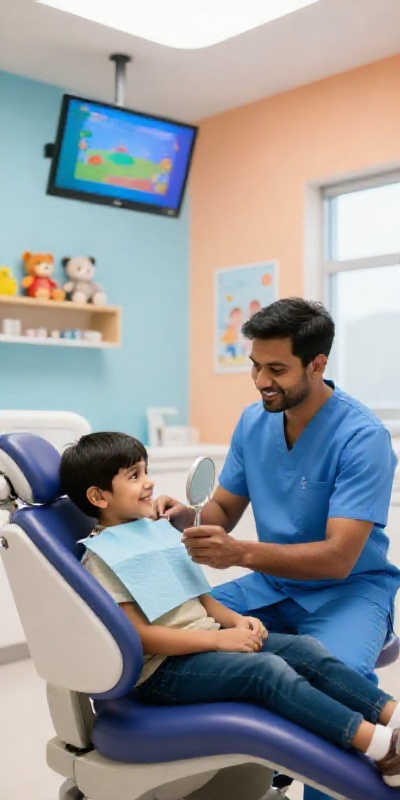
A Letter to Worried Parents
Let’s be honest: most of us grew up hearing “the dentist will hurt” stories at family dinners. So when it’s time to take our own little ones, our hearts beat a little faster. Will they cry? Will they cooperate? Will they ever forgive us? The good news from Dr. Jagveer Singh Saluja, who has guided thousands of children through their child’s first dental visit at our pediatric dentistry clinic in Kanpur, is this: when done right, that very first visit becomes one of the most positive, confidence-building experiences of your child’s life — and yours too.
According to the American Academy of Pediatric Dentistry (AAPD) and the American Dental Association (ADA), a child should see a dentist within 6 months of the first tooth appearing, and no later than 12 months of age (Stanford Children’s Health, AAPD 2014 guidelines). That timeline is supported by the European Journal of Paediatric Dentistry and the Indian Society of Pedodontics. Starting early isn’t overkill — it sets the foundation for a lifetime of healthy smiles, and it dramatically lowers the chance of dental anxiety later in life (PMC, 2021).
When Should Your Child First Visit the Dentist?
Every child’s dental journey is unique, but pediatric dentistry follows predictable developmental milestones. Think of the chart below as a friendly roadmap, not a rulebook. If your child is slightly behind on a milestone, that’s perfectly okay — Dr. Saluja will personalize the plan to your child’s pace.
6 Months First Tooth Appears
The lower central incisor usually makes its debut. Begin gentle gum wiping with a soft cloth, and start planning your child’s first dental appointment within six months.
1 Year First Dental Visit Recommended
The AAPD and ADA recommend the first “well-baby” dental visit by age one. It’s mostly a friendly check, parent education, and getting your child comfortable in a dental chair.
2–3 Years First Professional Cleaning
Most baby teeth are now in place. This is the ideal age for a gentle polishing, fluoride assessment, and introducing your child to the full dental team experience.
6 Years First Adult Teeth Erupt
The first permanent molars (six-year molars) and incisors arrive — often behind still-present baby teeth. Sealants are highly recommended at this stage.
7–12 Years Mixed Dentition Assessment
Baby teeth and adult teeth share the mouth. This is the critical window for orthodontic evaluation, growth guidance, and habit-breaking appliances if needed.
13–16 Years Teenage Care & Wisdom Teeth
Wisdom teeth begin forming, orthodontic treatment often peaks, and sports-mouth-guard fitting becomes important. Continues into our general dentistry umbrella.
Why Pediatric Dentistry Matters
You wouldn’t take your toddler to a general physician for everything — and the same logic applies to teeth. Pediatric dentists complete an additional 3 years of specialized training beyond dental school, focusing on child psychology, growth, and behavior guidance. Research published in the International Journal of Clinical Pediatric Dentistry confirms that children treated by pediatric specialists have measurably lower dental anxiety and better long-term oral health outcomes (PMC, 2021).
Developing Teeth Need Specialized Care
Baby teeth have thinner enamel, larger pulp chambers, and unique decay patterns. Techniques that work on adult teeth can damage a child’s still-developing smile. Pediatric dentists are trained to recognize and treat these subtle differences.
Behavioral Techniques That Actually Work
From tell-show-do to positive reinforcement, voice modulation, and protective stabilization — pediatric specialists use evidence-based techniques recognized by the AAPD to help even the most anxious child relax in the chair.
A Strong Prevention Focus
Pediatric dentistry emphasizes fluoride, sealants, diet counseling, and parental coaching — the four pillars that prevent 80% of childhood cavities before they ever start.
Building Lifelong Positive Associations
The brain forms its “dentist memory” between ages 2 and 6. A gentle, fun first experience rewires the brain to see the dentist as a friend — not a fear — for life (PMC, 2021).
Early Detection of Orthodontic Issues
Crossbites, crowding, jaw growth discrepancies, and airway issues are far easier (and cheaper) to correct when caught at age 7–9. Our integrated orthodontic team works hand-in-hand with our pediatric specialists.
Our 5-Step Tell-Show-Do Approach
Dr. Jagveer Singh Saluja is known across Kanpur for his patient, almost magical way with children. The secret is a structured, scientifically-proven behavior guidance method adapted from the AAPD’s Behavior Guidance for the Pediatric Dental Patient guidelines (AAPD, 2020):
Tell in Kid-Friendly Language
“I’m going to count your teeth with my special tooth counter.” “This magic straw will give your tooth a tiny shower.” No scary words. No surprise movements. Just honest, friendly explanations matched to your child’s age.
Show on a Model
Dr. Saluja keeps a friendly toy crocodile and a giant tooth model right at child-eye-level. Children can touch, hold, and “try” the mirror, suction, and polisher on the model before anything comes near their own mouth.
Do the Gentle Treatment
Only when your child looks calm and curious do we proceed — slowly, quietly, and always with a parent’s hand within reach. The Tell-Show-Do technique has been shown in multiple meta-analyses to reduce dental anxiety in pediatric patients by up to 40% (ResearchGate, 2024).
Praise Positive Behavior
“Wow, you sat so still like a brave little tiger!” Honest, specific praise builds confidence for the next visit. We never shame, scold, or bribe — we celebrate every tiny success.
Reward with a Small Prize
Every child leaves with a sticker, a toothbrush of their favorite cartoon character, and a certificate of bravery. It sounds simple, but turning a clinical visit into a small celebration is what makes children ask to come back.
Services for Every Stage
Whether your little one has just sprouted their first tooth or is navigating the chaotic teenage years, our pediatric dentistry in Kanpur offers age-appropriate care under one roof.
First Visit & Friendly Introduction
A 20-minute “happy visit” where we meet the family, count teeth with a mirror, and give personalized home-care coaching. No drills. No stress.
Professional Cleaning for Kids
Ultrasonic scaling and gentle polishing with kid-flavored pastes (bubblegum, strawberry, chocolate). Six-monthly cleanings prevent 80% of childhood gum issues.
Fluoride Treatment & Sealants
Topical fluoride varnish and pit-and-fissure sealants on the chewing surfaces of molars — the #1 proven cavity-prevention combo for kids.
Pediatric Fillings
Tooth-colored, mercury-free, BPA-free composite fillings that bond beautifully to baby teeth. Quick, painless, and matched to the natural shade.
Pulp Therapy / Pulpotomy
When decay reaches the nerve of a baby tooth, a pulpotomy (a “baby root canal”) saves the tooth until it naturally falls out — protecting the adult tooth underneath.
Habit Breaking Appliances
Custom-made, colorful appliances that gently correct thumb-sucking, tongue-thrusting, and mouth-breathing — usually within 3 to 6 months.
Common Pediatric Concerns We Treat
From teething troubles to sports injuries, Dr. Saluja’s team sees (and reassures parents about) almost every childhood dental concern. Here are the eight we address most often, with a quick prevention tip for each.
Baby Bottle Tooth Decay
Early childhood cavities caused by prolonged milk or juice bottle contact, especially at nap time. White or brown spots on upper front teeth are the first sign.
Prevention: Switch to a sippy cup by 12 months and never put baby to bed with a bottle.
Thumb Sucking
Natural up to age 3–4. Beyond that, it can push front teeth forward and narrow the upper jaw, creating an open bite.
Prevention: Praise children for not sucking; consider a habit-breaking appliance if it persists past age 5.
Tongue Thrusting
The tongue presses against the front teeth during swallowing, gradually pushing them outward. Often linked to mouth breathing and long-term thumb habits.
Prevention: Myofunctional therapy exercises; airway evaluation if mouth-breathing accompanies it.
Early Tooth Loss
Losing a baby tooth too early (from decay or trauma) causes adjacent teeth to drift, blocking the adult tooth from erupting properly.
Prevention: A space maintainer can hold the spot open until the permanent tooth arrives.
Teeth Grinding (Bruxism)
Common during deep sleep phases in children. Usually self-resolves, but persistent grinding can wear enamel and cause jaw pain.
Prevention: A custom night-guard for kids over 8; stress-reduction and screen-time management help too.
Dental Anxiety
Real, common, and treatable. Studies show 1 in 5 children experience some level of dental fear (PMC, 2021).
Prevention: Start young, stay positive, choose a tell-show-do clinic like ours, and never use the dentist as a threat.
Crooked Baby Teeth
Crowding in baby teeth often predicts crowding in adult teeth. Early evaluation (around age 7) allows simple interceptive orthodontics.
Prevention: Avoid prolonged pacifier use, treat mouth breathing early, and schedule a free orthodontic consultation.
Sports Injuries
30% of childhood dental injuries are sports-related. A knocked-out baby or adult tooth is a dental emergency — act within 30 minutes.
Prevention: Custom-fitted mouth-guards for cricket, kabaddi, football, skating, and even cycling.
“Every child who sits in our chair leaves a little braver than when they arrived. That’s the real job of pediatric dentistry — not just fixing teeth, but building confident, unafraid adults.” — Dr. Jagveer Singh Saluja, Saluja Dento Max Fac Centre, Kanpur
Creating a Child-Friendly Environment
The moment you step into Saluja Dento Max Fac Centre, you’ll notice it doesn’t feel like a typical dental clinic. Our pediatric zone is designed with warm sage-green and soft blue walls, cartoon murals, a ceiling-mounted TV playing your child’s favorite show, gentle music, and a treasure-trove of toys and books in the waiting area. The dental chair itself comes with built-in screens so children can watch cartoons while we work.
Distraction isn’t a gimmick — it’s evidence-based care. Research published in the International Journal of Paediatric Dentistry (2022) shows that audiovisual distraction reduces perceived pain in pediatric patients by 30–50%. For children with severe anxiety, we offer laughing gas (nitrous oxide) sedation — a safe, mild option that has been used in pediatric dentistry for over 50 years worldwide. Dr. Saluja and his team are certified in pediatric sedation and airway protection, so your child is always in expert hands.
Preventive Care Tips for Parents
Most childhood dental problems are 100% preventable. Here are six practical tips, recommended by the Indian Society of Pedodontics and Preventive Dentistry, that you can start using tonight.
Brush Together
Make brushing a 2-minute family ritual every morning and night. Kids模仿 what they see, not what they’re told. Set a timer or play a fun song.
Limit Sugary Snacks
Sticky toffees, fruit juices, and packaged biscuits are the top cavity culprits in Indian children. Swap them for cheese, nuts, fruits, and plain milk.
Use Fluoride Toothpaste
From age 3 onwards, use a pea-sized amount of fluoride toothpaste (1000 ppm). For children under 3, use a rice-grain smear of kids’ toothpaste.
First Visit by Age 1
Don’t wait for a toothache. The AAPD-recommended first visit by 12 months catches problems early and normalizes the dental experience.
Use a Cup, Not a Bottle
Transition from bottle to sippy cup by 12–15 months. Prolonged bottle use — especially at night — is the #1 cause of baby bottle tooth decay.
Lead by Example
Let your child watch you floss, brush, and smile confidently. Children who see parents prioritizing dental care grow up to do the same.
When to Worry: Warning Signs
Children don’t always say “my tooth hurts.” They go quiet, eat on one side, or stop smiling. Watch for these red flags and book an appointment if you notice any:
White spots or chalky lines on teeth — the earliest sign of decay.
Dark brown or black spots that don’t brush off — active cavities.
Persistent bad breath even after brushing — possible decay or gum infection.
Swollen, red, or bleeding gums — early gum disease or abscess.
Tooth pain, especially at night or with hot/cold food — nerve involvement.
Consistent mouth breathing during the day — airway or jaw-development issues.
Jaw clicking, popping, or difficulty opening wide — possible TMJ concerns.
Cost & Family Discounts
Quality pediatric dentistry should never feel out of reach. Below is a transparent snapshot of our standard pediatric treatment pricing at Saluja Dento Max Fac Centre, Kanpur. We accept all major insurance plans, and offer special family discounts when 2 or more siblings are treated together.
| Treatment | Typical Price (₹) | What’s Included |
|---|---|---|
| First Visit & Consultation | ₹ 300 | Exam, parent counseling, growth chart |
| Professional Cleaning (Pediatric) | ₹ 800 – 1,500 | Scaling, polishing, oral hygiene demo |
| Fluoride Treatment | ₹ 500 – 1,000 | Varnish application, post-care kit |
| Sealants (per tooth) | ₹ 500 – 1,000 | Pit & fissure sealing, follow-up |
| Pediatric Filling (composite) | ₹ 600 – 1,200 | Tooth-colored, BPA-free material |
| Pulpotomy / Pulp Therapy | ₹ 1,500 – 2,500 | Baby root canal + SS crown if needed |
| Habit-Breaking Appliance | ₹ 3,000 – 6,000 | Custom appliance + monthly reviews |
| Custom Sports Mouth-Guard | ₹ 1,500 – 2,500 | Impression, fitting, protective case |
Prices are indicative and may vary based on case complexity. EMI options available. Family discount: 10% off when 2+ children are treated.
Frequently Asked Questions
By the Numbers: Pediatric Dental Health in India
Give Your Child the Gift of a Healthy Smile
Book your child’s first visit with Dr. Jagveer Singh Saluja at Saluja Dento Max Fac Centre, Kanpur. Our first-visit consultation is just ₹300 — and we promise a high-five, a sticker, and a smile.
References: American Academy of Pediatric Dentistry (AAPD) Guidelines (2014, 2020) · American Dental Association (ADA) Recommendations · Stanford Children’s Health First Visit Fact Sheet · Int J Clin Pediatr Dent (PMC9983582, 2023) · J Clin Med (PMC8700154, 2021) · European Journal of Paediatric Dentistry (2020) · Tell-Show-Do Meta-Analysis (ResearchGate, 2024) · Indian Society of Pedodontics & Preventive Dentistry.
Related Articles You May Enjoy
5 Essential Daily Habits for Healthier Teeth: A Kanpur Dentist’s Complete Guide
🦷 Dental Care Tips • 8 min read 5 Essential Daily Habits for Healthier Teeth A Kanpur Dentist’s…
Dental Care TipsYour Child’s First Dental Visit: A Complete Guide for Parents in Kanpur
Pediatric Dentistry • 10 min read Your Child’s First Dental Visit: A Complete Guide for Parents in Kanpur…
Pediatric Dentistry
Smile Makeover in Kanpur: A Complete Guide to Veneers, Whitening & Smile Design
Cosmetic Dentistry • 9 min read Smile Makeover in Kanpur: A Complete Guide to Veneers, Whitening & Smile…
Cosmetic Dentistry