

5 Essential Daily Habits for Healthier Teeth
A Kanpur Dentist’s Complete Guide to Building a Smile That Lasts a Lifetime — By Dr. Jagveer Singh Saluja, Saluja Dento Max Fac Centre
If you live in Kanpur, your teeth are working harder than you think. From the morning masala chai to evening paan, from the city’s famously hard water to the irresistible pull of mithai shops in Gwaltoli — your mouth faces a daily battle. The good news? Winning that battle is simpler than you think. After treating thousands of patients at Saluja Dento Max Fac Centre, Dr. Jagveer Singh Saluja has distilled daily dental care into five practical habits anyone can follow. This guide blends global best practices (American Dental Association, NHS, CDC) with city-specific insights to help you achieve genuinely better oral hygiene in Kanpur.
Habit 1: Brush Smart, Not Just Hard
The single most powerful thing you do for your teeth happens twice a day for two minutes each time. The American Dental Association, NHS, and CDC all converge on the same prescription: brush twice daily for two minutes using a fluoride toothpaste. Yet most of us either rush through it (average: 45 seconds) or press too hard and damage our gums.
The right technique matters far more than the brush you buy. Hold your brush at a 45-degree angle to the gum line and use gentle circular motions — never aggressive back-and-forth sawing, which wears down enamel and recedes gums. Spend equal time on outer, inner, and chewing surfaces, and don’t forget to brush your tongue, where up to 70% of bad-breath bacteria live.
The 2-Minute Rule, Visualized
Divide your mouth into four quadrants. Spend 30 seconds on each — outer, inner, and chewing surfaces. Use a timer or a song. Two minutes feels long only because most of us are used to 45 seconds.
Electric vs Manual: A Cochrane review of 56 studies found electric brushes (especially oscillating-rotating types) reduce plaque by 21% and gingivitis by 11% versus manual brushes over 3 months. That said, a manual brush used correctly is absolutely fine — the technique beats the tool.
Replace every 3 months: A frayed brush cleans roughly 30% less effectively. The blue indicator bristles on most brushes fade halfway through this period — your cue to swap. If you’ve had a cold, flu, or throat infection, replace your brush immediately.
Kanpur-specific insight: Because Kanpur’s groundwater is moderately hard (with elevated calcium and magnesium), it can leave a faint mineral film on enamel that attracts tea and paan stains faster. Choose a soft-bristled brush — medium or hard bristles accelerate gum recession, especially when combined with mineral deposits. Our general dentistry team sees early gum recession in patients as young as 25 who used firm brushes “to clean better.”
📊 How Brushing Habits Stack Up
Effectiveness of common brushing approaches, based on plaque-removal studies (lower % = more plaque left behind).
Habit 2: Floss Like a Pro (Yes, Every Day)
If brushing is the headline act, flossing is the unsung supporting role. The numbers are sobering: brushing alone cleans only about 60% of your tooth surfaces. The remaining 40% — the tight spaces between teeth and just under the gum line — is where most cavities and gum disease quietly begin. Left undisturbed, plaque in these areas mineralizes into tartar in 24–72 hours, and tartar can only be removed professionally.
The right technique (5 steps):
- Pull about 18 inches of floss and wind most around one middle finger, the rest around the opposite hand’s middle finger.
- Hold the floss taut between thumbs and index fingers, leaving about 1–2 inches of working length.
- Guide it gently between teeth using a back-and-forth sawing motion — never snap it down onto your gums.
- Curve the floss into a C-shape around the base of each tooth and slide it beneath the gum line.
- Use a clean section of floss for every tooth to avoid moving bacteria from one spot to another.
Don’t like floss? Try these:
You’re not alone — about 35% of Indians report finding floss awkward. The good news is that alternatives are evidence-backed. Water flossers (Waterpik, Agaro) reduce bleeding by up to 93% over 4 weeks. Interdental brushes — tiny bottle-brush-shaped tools — are excellent for people with wider gaps, braces, or bridge work. Floss picks are convenient on the go, though slightly less effective. Any of these, used daily, are far better than occasional perfect flossing.
🧰 Interdental Cleaning Tools Compared
Choose based on your comfort, gap size, and dental work. From our clinical recommendations at Saluja Dental.
Habit 3: Mind Your Diet, Especially the Chai
What you eat in Kanpur — and how often — shapes your smile more than any toothpaste can undo. The standard culprits (sugary treats, sticky sweets, carbonated drinks) are universal, but our city has its own dental villains worth naming.
Chai & coffee: Tannins in tea and coffee bind to enamel and cause yellow-brown staining. Worse, when you sip slowly over an hour, you’re bathing your teeth in acid and pigment continuously. A small but powerful change: drink your chai within 15–20 minutes, then rinse with plain water. Avoid the all-day sip-and-sip habit.
Paan, gutka, and supari: Direct warning from Dr. Saluja: these are the leading cause of oral submucous fibrosis (OSF) and oral cancer in North India. Patients often start in their teens, and the damage is largely irreversible. If you currently use any of these, this is the single biggest gift you can give your future self — quit today.
Mithai & sticky sweets: Jalebi, imarti, soan papdi, and gajak all cling to teeth and feed bacteria for hours. If you indulge, brush within 30 minutes — or at minimum, rinse vigorously and chew sugar-free gum.
Eat Your Way to a Cleaner Smile
Crunchy apples, carrots, and cucumbers act as natural scrubbers. Dairy products (curd, paneer, milk) deliver calcium and phosphates that remineralize enamel. Green tea contains catechins that suppress cavity-causing bacteria. And plain water after meals is the single most underrated dental tool you own.
Snacking frequency matters more than quantity: Every time you eat something sugary or starchy, your mouth’s pH drops into the “acid attack zone” (below 5.5) for about 30 minutes. Five small snacks = five acid attacks. Two proper meals = two. This is why dentists care more about how often you eat than what you eat.
Habit 4: Rinse Smart
Mouthwash is not a substitute for brushing or flossing — let’s get that out of the way. But used correctly, a therapeutic rinse adds a meaningful layer of protection, especially at night when saliva flow (your mouth’s natural cleanser) drops by up to 60%.
Therapeutic mouthwashes like Listerine, Colgate Plax, or Hexidine contain active ingredients — chlorhexidine, cetylpyridinium chloride, or essential oils — that reduce bacterial load by 60–75%. Timing matters: Use mouthwash at a different time than brushing (e.g., after lunch) to avoid washing away the concentrated fluoride from your toothpaste.
Natural alternatives have their place. A salt-water rinse (½ tsp salt in warm water) is excellent after extractions or during gum infections. A drop of clove oil on a cotton bud can provide emergency relief from toothache (clove = eugenol, a natural anesthetic). Tulsi and neem-based rinses have mild antibacterial properties.
Don’t overdo it: Excessive rinsing with alcohol-based mouthwashes can dry out oral tissues and disrupt the microbiome. Avoid rinsing vigorously with water immediately after brushing — you wash away the protective fluoride layer. Spit, don’t rinse.
Bonus step — tongue cleaning: Use a tongue scraper (or the back of your brush) once a day. A biofilm-coated tongue harbours bacteria that cause bad breath (halitosis) and contribute to plaque formation. This 30-second step, often forgotten, is a genuine game-changer for fresh breath.
Habit 5: Visit Your Dentist Every 6 Months
You wouldn’t skip a service on your two-wheeler for 10 years and expect it to run smoothly — but most of us do exactly that to our teeth. A six-monthly visit isn’t upselling; it’s preventive maintenance. Here’s what actually happens during a check-up at Saluja Dento Max Fac Centre:
- Professional scaling & cleaning removes tartar (calculus) that brushing cannot — and tartar is the root cause of gum disease.
- Early cavity detection with visual exam and, when needed, digital X-rays catches decay before it reaches the nerve and demands a root canal.
- Oral cancer screening is especially important for Kanpur patients given regional paan/gutka use. Early detection of pre-cancerous lesions has a 5-year survival rate above 80%.
- Bite & jaw assessment identifies grinding (bruxism), TMJ issues, and orthodontic needs early.
- Personalised advice based on YOUR mouth, not generic rules — your brush type, your child’s cavity risk, your gum health.
The math that should convince you: A standard check-up and cleaning costs roughly ₹500–800. A single filling costs ₹800–1,500. A root canal with crown: ₹8,000–15,000. An implant to replace a lost tooth: ₹25,000–45,000. Prevention is not just better than cure — it’s roughly 10x cheaper.
Overcoming dental anxiety: If the sound of a drill makes your palms sweat, you’re among 36% of adults who report some dental fear. Modern dentistry is dramatically gentler than the version your grandparents endured. Tell us about your anxiety at the start of your appointment — we use numbing gels, slow-paced techniques, and frequent breaks. Read our FAQs or call us to discuss concerns before booking.
🌆 The Kanpur-Specific Oral Health Checklist
Generic advice doesn’t always fit a Kanpur lifestyle. Dr. Saluja’s team has compiled six city-specific tips drawn from what we see in our chairs every week.
Rinse after chai: A quick water rinse after every cup reduces tannin staining by up to 40%.
Avoid pan masala completely: Even “saunf-mishri” variants contain areca nut — a Group 1 carcinogen.
Use a RO filter or bottled water for brushing if possible: Hard water accelerates tartar buildup.
Watch for yellowish-brown mineral film: Early sign of hard-water staining — book a professional cleaning.
Heavy tea/coffee drinker? Schedule cleanings every 4 months instead of 6 to stay ahead of stains.
Pre-festival/wedding polish: Book a cleaning 2 weeks before big events for that camera-ready smile.
⚠️ 7 Common Mistakes That Undermine Good Routines
Doing the right things wrong is almost worse than doing nothing. Watch out for these seven pitfalls we see most often.
Brushing too hard
Scrubbing does not equal cleaning. Use gentle pressure — the weight of an orange. Hard brushing wears enamel and causes gum recession.
Rinsing vigorously after brushing
You wash away the concentrated fluoride. Spit, don’t rinse. Wait 30 minutes before eating or drinking.
Skipping the night-time brush
Sleep reduces saliva flow, so overnight bacteria multiply faster. The night brush is the most important one of the day.
Using toothpicks aggressively
Wooden toothpicks can splinter and damage gums. Use floss, interdental brushes, or a water flosser instead.
Ignoring bleeding gums
Bleeding during brushing is not normal. It’s the first sign of gingivitis. Don’t avoid the area — gently clean it and see a dentist within 2 weeks.
Sugary “mouth fresheners”
Many post-meal mukhwas and mouth fresheners are loaded with sugar. Choose sugar-free versions or plain fennel (saunf).
Sharing toothbrushes
Toothbrushes transfer bacteria, viruses, and blood. Never share — even with family. Each person needs their own.
📅 Building the Habit: A 21-Day Starter Plan
Research on habit formation (University College London, 2009) shows that 21 days is a realistic window to turn a behaviour into an automatic routine. Here’s a gentle ramp-up plan designed by Dr. Saluja for busy Kanpur families.
🌱 Week 1 — Foundation
- Brush twice daily (morning + night) for 2 full minutes
- Set a phone alarm titled “Night Brush”
- Buy a soft-bristled brush and fluoride toothpaste
- Rinse mouth with water after every chai/meal
- Toss out any frayed brush older than 3 months
🌿 Week 2 — Add the Layers
- Introduce flossing once daily (even one minute counts)
- Add tongue cleaning to your night routine
- Swap sugary mithai for a fruit or curd snack
- Drink chai in under 20 minutes — no all-day sipping
- Use a therapeutic mouthwash after lunch
🌳 Week 3 — Lock It In
- Book your next dental check-up at Saluja Dento Max Fac Centre
- Add water-flossing or interdental brushes if you find flossing hard
- Cut down visible sugar — no sugar in chai/coffee
- Get your family onboard — share this article
- Celebrate! Reward yourself — a new brush head or whitening session
🚨 When to See a Dentist Sooner (Not in 6 Months)
Some signs should never wait for a routine check-up. If you notice any of these, call us at Saluja Dental the same week.
Persistent tooth pain
Pain lasting more than 2 days often signals decay reaching the nerve. Don’t wait — see a dentist within 48 hours.
Bleeding gums
Especially while brushing or eating. Early gingivitis is reversible; advanced periodontitis isn’t.
Loose or shifting teeth
Adult teeth should never feel loose. Could indicate gum disease, infection, or bite issues.
Persistent bad breath
Not solved by brushing or mints. May signal gum disease, dry mouth, or digestive issues.
Hot/cold sensitivity
Sudden or worsening sensitivity often means enamel wear, gum recession, or a cracked tooth.
Sores that don’t heal
Any mouth ulcer lasting more than 2 weeks needs professional evaluation — especially if you’re a paan/gutka user.
Chronic dry mouth
Saliva protects teeth. Persistent dryness dramatically raises cavity risk and warrants investigation.
❓ Frequently Asked Questions
Dr. Saluja answers the questions our patients ask most often. Click each to expand.
Related Articles
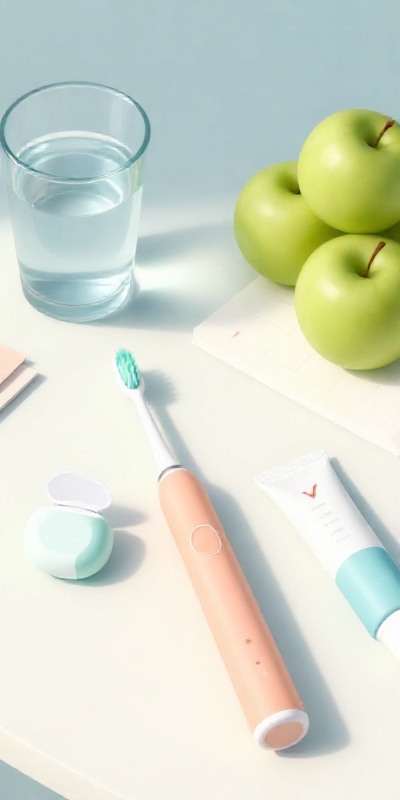
5 Essential Daily Habits for Healthier Teeth: A Kanpur Dentist’s Complete Guide
🦷 Dental Care Tips • 8 min read 5 Essential Daily Habits for Healthier Teeth A Kanpur Dentist’s…
Dental Care Tips
Your Child’s First Dental Visit: A Complete Guide for Parents in Kanpur
Pediatric Dentistry • 10 min read Your Child’s First Dental Visit: A Complete Guide for Parents in Kanpur…
Pediatric Dentistry
Smile Makeover in Kanpur: A Complete Guide to Veneers, Whitening & Smile Design
Cosmetic Dentistry • 9 min read Smile Makeover in Kanpur: A Complete Guide to Veneers, Whitening & Smile…
Cosmetic Dentistry